 Reviews



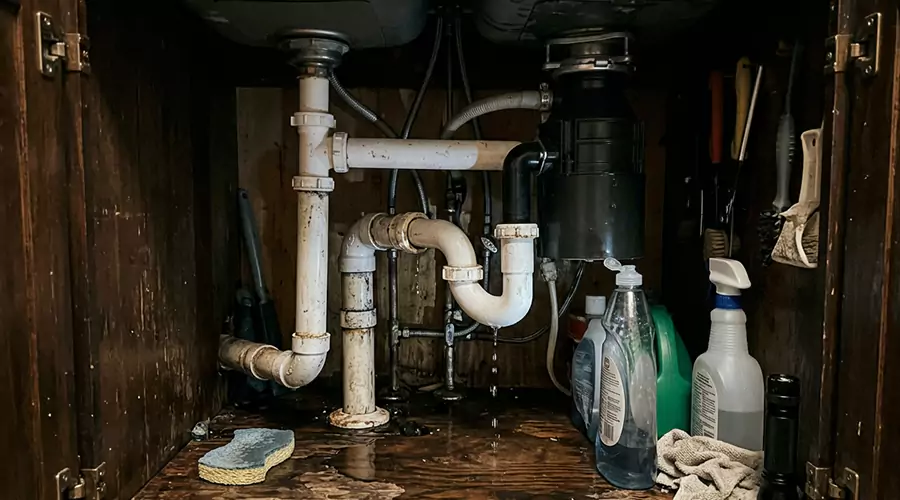
A sink leaking underneath usually has a failed P-trap connection, drain seal, or water-supply fitting. Pipe leak repairs average about $500 in 2026 and can range from $150 to $4,700 when access or damage becomes more involved. Start by drying every connection before testing the sink. Sink installation can also provide a properly fitted replacement when an existing sink or its connections are damaged beyond repair.
The supplied keyword sink leaking underneath focuses specifically on water appearing below the basin.
The key diagnostic question is whether the water appears while the sink is unused or only while water is draining.
What Usually Causes Water Under a Sink?
Water beneath a sink generally comes from pressurized supply plumbing or the gravity drain system. Supply hoses and shutoff valves can leak continuously. P-trap joints and drain seals normally leak during use. The timing makes these two groups much easier to separate.
Possible sources include:
- A loose P-trap slip nut.
- A damaged compression washer.
- A cracked trap or drain pipe.
- A failed drain-flange seal.
- A leaking flexible supply line.
- Moisture around a shutoff valve.
- Water travelling down from a faucet connection.
Water follows gravity and can move along plumbing before dripping.
The first wet connection matters more than the puddle's final location.
How Does an Under-Sink Leak Progress?
An under-sink leak can remain hidden because cabinets conceal the plumbing. A slow drip can repeatedly wet wood-based materials until they swell. Supply-side leaks carry a greater immediate risk because the line stays under pressure until the appropriate valve is closed.
| Leak Stage | What You Notice | Likely Concern | 2026 Cost Exposure |
|---|---|---|---|
| Early | Small occasional drop | Washer or loose joint | Often simple repair |
| Repeating | Cabinet stays damp | Drain seal failure | Sink repair can reach hundreds |
| Constant | Water appears while unused | Supply leak | Pipe repair averages $500 |
| Hidden damage | Wall or floor is affected | Larger plumbing problem | Up to $4,700 for difficult pipe work |
Current 2026 pipe leak data places the normal range between $150 and $4,700. Difficult access and water damage increase the total.
What Warning Signs Should You Look For?
A sink can leak underneath for days before you notice a visible puddle. The cabinet often shows earlier evidence through moisture marks or material changes. Inspect the plumbing when you notice any new smell or staining beneath the sink.
- The cabinet floor feels damp.
- A P-trap connection develops droplets.
- One supply hose stays wet.
- The shutoff valve shows mineral deposits.
- Water appears only during drainage.
- A puddle forms while the sink is unused.
- Cabinet material begins swelling.
- Metal plumbing develops corrosion.
- A musty smell appears inside the cabinet.
- Water spreads onto nearby flooring.
A drain leak and a supply leak often produce different timing even when the puddle looks identical.
Why Does the P-Trap Leak?
A P-trap can leak when its slip-joint washer is worn or out of position. A loose nut can create the same symptom. Metal traps can also corrode while plastic parts can crack after overtightening or physical movement inside the cabinet.
Inspect the trap only after drying it.
If the leak occurs during drainage:
- Place a bucket below the pipe.
- Check whether the slip nuts are loose.
- Tighten a loose plastic nut by hand first.
- Test the sink again.
- Remove the connection if the leak remains.
- Inspect the washer for damage.
- Replace cracked parts instead of tightening them harder.
A misaligned pipe can make a new washer leak if the joint does not seat evenly.
Why Does the Drain Flange Leak?
The drain flange can leak where the drain body passes through the sink basin. A failed seal allows basin water to travel down the outside of the tailpiece. The leak can then appear around the P-trap even though the trap itself remains watertight.
You can isolate the flange with a holding-water test.
- Dry the underside of the basin.
- Close the stopper.
- Add several inches of water.
- Do not release the drain.
- Watch beneath the drain opening.
- Check for moisture around the flange.
Water appearing before the stopper is released points toward the seal at the basin.
If the area remains dry, continue with a drainage test.
Why Does the Sink Leak Only When It Drains?
A leak that occurs only during drainage normally points toward the waste assembly rather than the pressurized supply system. The drain flange and tailpiece are possible sources. P-trap connections should also be checked because they carry the larger water volume released from the basin.
Test a drain-side leak by filling the sink partway.
- Then release the stopper and watch the plumbing.
- Use dry tissue around each connection.
- The first wet tissue usually identifies the leaking joint.
The related keyword leaking pipe can apply when the drain pipe itself has cracked rather than a washer losing its seal.
Why Does the Sink Leak When It Is Not Being Used?
Water appearing while the sink is unused usually points toward a pressurized supply connection. Flexible hoses and shutoff valves remain under water pressure throughout the day. A leak there can continue regardless of whether water is flowing through the faucet or drain.
- Dry all supply connections.
- Place tissue around each fitting.
- Do not use the sink.
- Check the connections again after several minutes.
If the tissue becomes wet, shut off the affected supply valve when it operates normally.
Do not force a seized valve.
A leaking flexible supply hose is better replaced than repeatedly tightened.
Could the Faucet Be Sending Water Underneath?
Yes. Water can leak around a faucet body or mounting connection and travel through the countertop opening. The moisture then appears beneath the sink even though the drain and supply fittings near the bottom of the cabinet look normal.
- Dry the faucet base.
- Run the faucet.
- Move the handle.
- Use any pull-out sprayer.
- Watch the top of the sink.
- Then inspect directly beneath the faucet.
Water tracking down from above changes the repair target.
The lowest wet component is not necessarily the failed one.
Could It Be Condensation?
Condensation can create moisture on cold supply pipes when surrounding air is humid. Condensation tends to form across a larger pipe surface. A plumbing leak usually forms repeatedly at one fitting or crack and follows the same path after the pipe has been dried.
- Dry the pipe completely.
- Leave the sink unused.
- Observe how moisture returns.
- Fine droplets spread across the cold surface suggest condensation.
- A concentrated drop at one joint suggests a leak.
Do not tighten plumbing simply because an entire cold-water line looks damp.
What DIY Test Can Find an Under-Sink Leak?
A staged paper-towel test is one of the simplest ways to locate an under-sink leak. Test the plumbing while unused first. Test the faucet next. Finish with a large drain release. This order keeps the supply and waste systems separate during diagnosis.
Follow these steps:
- Remove everything from the cabinet.
- Dry every visible pipe and fitting.
- Place dry paper beneath the plumbing.
- Wait ten minutes without using the sink.
- Check supply fittings.
- Run the faucet and inspect again.
- Close the stopper.
- Fill the basin halfway.
- Release the water.
- Check the drain joints immediately.
- Mark the first wet location.
Do not chase water after it has already spread across the cabinet.
When Should You Call a Professional?
Professional repair is appropriate when a supply valve is damaged or the leaking pipe extends into a wall. Pipe leak repairs cost $150 to $4,700 in 2026 with an average near $500. General plumbing work commonly ranges from $182 to $501 for many projects.
Professional diagnosis makes sense when:
- The shutoff valve leaks or will not close.
- A flexible hose has failed.
- A drain pipe is cracked inside a wall.
- The cabinet or flooring has visible water damage.
- Replacing a washer does not stop the leak.
- The source cannot be found after staged testing.
Prompt repair reduces the chance that a small pipe leak repair becomes a cabinet or flooring project.
How Can You Prevent Another Leak Under the Sink?
Under-sink leak prevention is mainly visual inspection and protection from accidental pipe movement. Most of these connections are exposed, which makes it possible to identify moisture before a large amount of water accumulates.
A simple routine includes:
- Check beneath the sink every few months.
- Keep heavy storage away from plumbing.
- Look for white deposits around joints.
- Feel supply connections for moisture.
- Inspect the P-trap after drain work.
- Replace visibly damaged flexible hoses.
- Investigate a new musty smell promptly.
The inspection takes only a few minutes.
A hidden pipe leak can cost hundreds or thousands of dollars once access and material damage are involved.
Conclusion
If your sink is leaking underneath, dry every connection and identify when the water appears. Moisture while the sink is unused points toward the supply side. Water that begins during drainage usually comes from the drain flange or P-trap. Trace the first wet connection rather than the final puddle. If a shutoff valve or hidden pipe has failed, professional repair can help prevent wider water damage.
Frequently Asked Questions
Why does water appear under my sink only after draining it?
The P-trap or drain seal may be leaking when wastewater passes through the assembly.
Can a loose P-trap nut cause a leak?
Yes. A loose slip-joint connection can drip during sink use.
Why is water under the sink when nobody used it?
A supply hose or shutoff valve may be leaking under constant pressure.
Can a clogged sink cause an under-sink leak?
A backup can keep water against a weak drain joint and expose an existing seal problem.
Should I tighten every connection under the sink?
No. Find the leaking joint first. Overtightening plastic plumbing can damage the fitting.